

Finance teams choosing a cross-border payment platform should compare the full operating model. Settlement speed, FX visibility, transfer fees, currency coverage, compliance controls, integrations, reconciliation, and support all affect the real cost.
This guide turns a bottom-of-funnel comparison into a decision-ready shortlist. CFOs and finance managers can use it to choose by use case, not brand recognition. The goal is simple: select the platform that reduces payment delays, hidden costs, compliance risk, and manual finance work.
Best cross-border payment platforms for businesses: quick verdict
The best cross-border payment platform depends on what your finance team is solving. A company paying suppliers in time-sensitive corridors has different needs from a marketplace paying creators, or an AP team managing thousands of invoices.
•Best overall for same-day stablecoin-powered B2B payments: Fuze Business. Fuze is purpose-built for cross-border transactions that need faster settlement, stablecoin rails, transparent fees before confirmation, KYB onboarding, real-time tracking, and one account for payments, collections, conversion, and reconciliation.
•Best for transparent FX on straightforward transfers: Wise Business. Wise is strongest when the buyer wants mid-market-rate FX, upfront fees, and simple international transfers across common routes.
•Best for multi-currency operating workflows: Airwallex. Airwallex fits companies that need global accounts, FX, transfers, cards, payment acceptance, expense management, bill pay, and APIs.
•Best for AP-heavy global payables: Tipalti. Tipalti is strongest when the problem is supplier onboarding, tax documentation, invoice approvals, payment controls, and reconciliation across many payees.
Frame the ranking around fit. Compare speed, total cost, currencies, corridors, compliance depth, integrations, and operational workload before choosing.
How we compared the platforms
We evaluated each platform against criteria that matter during implementation, not just sales demos.
•Settlement speed: same-day, local rails, SWIFT-dependent, instant payout network, or manual review-dependent.
•Total cost: transfer fees, FX markup, card fees, withdrawal fees, SWIFT charges, monthly fees, and manual reconciliation cost.
•Currency and corridor coverage: supported currencies, recipient countries, local payout options, stablecoin support, and difficult corridors.
•Compliance and controls: KYB, KYC, AML screening, sanctions checks, audit trails, approvals, permissions, and licensing claims.
•Integrations: dashboard, API, ERP integrations, accounting integrations, webhooks, batch payments, and reconciliation exports.
•Best-fit use case: B2B supplier payments, treasury, marketplace payouts, AP automation, checkout, contractor payments, or embedded fintech infrastructure.
Headline transfer fees are not the whole cost. Wise’s SWIFT documentation notes that intermediary and recipient banks can deduct fees. It also states that global currency transfers via SWIFT can be slower and more expensive than normal transfers.
That is why buyers should model FX, route, payout method, review rules, and exception handling. A low quoted fee can still create delays, deductions, or reconciliation problems.
Cross-border payment platforms compared at a glance
| Platform | Best use case | Settlement speed | Fee model | Coverage | Compliance support | Integrations/API | Ideal company type |
|---|---|---|---|---|---|---|---|
| Fuze Business | Same-day stablecoin-powered B2B payments | Same-day over regulated stablecoin rails | FX rate and fees shown before confirmation | CNY, INR, SAR, GBP, EUR plus stablecoins such as USDC/USDT listed on site | KYB, regulated entities, compliance controls | Unified pay/collect/convert/track dashboard | Businesses paying suppliers, partners, teams, or trade counterparties across challenging corridors |
| Wise Business | Transparent FX for simple international transfers | Route-dependent | Upfront fee; no inflated mid-market rate | Strong for common business transfers and receiving details in multiple currencies | Regulated EMI status disclosed for Wise Payments Ltd. in the UK | Business account features and API docs available | SMBs and finance teams sending straightforward transfers |
| Airwallex | Multi-currency accounts and global operations | Route-dependent; transfers to 150+ countries stated | FX/transfers and platform fees vary by entity and product | Global accounts, FX, cards, bill pay, payment acceptance | Product availability varies by registered business location | API suite, sandbox, webhooks, docs | Scaling companies needing operating finance stack |
| Payoneer | Marketplaces, freelancers, sellers, and mass payouts | Route-dependent | Transaction fees vary by method, currency, country, and account type | 190+ countries/territories and 70+ currencies | Account-specific controls and fee disclosure | Enterprise/mass payout workflows | Marketplace sellers, contractors, and commerce platforms |
| Stripe | Checkout, subscriptions, marketplaces, and embedded revenue operations | Payout product-dependent | Card processing, international card, currency conversion, Connect/payout fees | Payments in 195+ countries, 135+ currencies; payouts to 160+ countries via Global Payouts | KYC/AML via Connect and compliance tooling | Strong APIs, Checkout, Connect, Billing | SaaS, ecommerce, platforms, and marketplaces |
| OFX | Larger transfers and FX risk support | Transfer-dependent | FX margin and product-dependent pricing | 30+ currencies and 180+ countries stated | Regulated financial platform; forward contracts subject to approval | Xero/QuickBooks integrations, batch payments | Importers, exporters, and teams managing larger FX exposure |
| Revolut Business | SMB multi-currency balances and team spend | Transfer-dependent | Plan allowances, transfer fees, FX allowance limits | 25+ currencies in U.S. business pricing; up to 30 currencies on multi-currency page | Region and plan dependent | Dashboard, cards, spend tools, payments | Smaller global teams needing accounts and cards |
| Tipalti | AP automation, supplier payments, tax and invoice workflows | Payment-method dependent | Payer/payee and method-dependent | 200+ countries/territories, 120+ currencies, 50+ methods | Tax forms, sanctions/AML screening, audit trails, approval workflows | ERP integrations and API | Mid-market/enterprise AP teams |
| Nium / Thunes / Rapyd | Embedded payout infrastructure | Network/corridor-dependent | Sales-led or platform pricing | Broad payout networks and API-first rails | Infrastructure-grade compliance varies by contract | APIs, wallets, local payout rails | Fintechs, marketplaces, platforms, enterprises |
1. Fuze Business
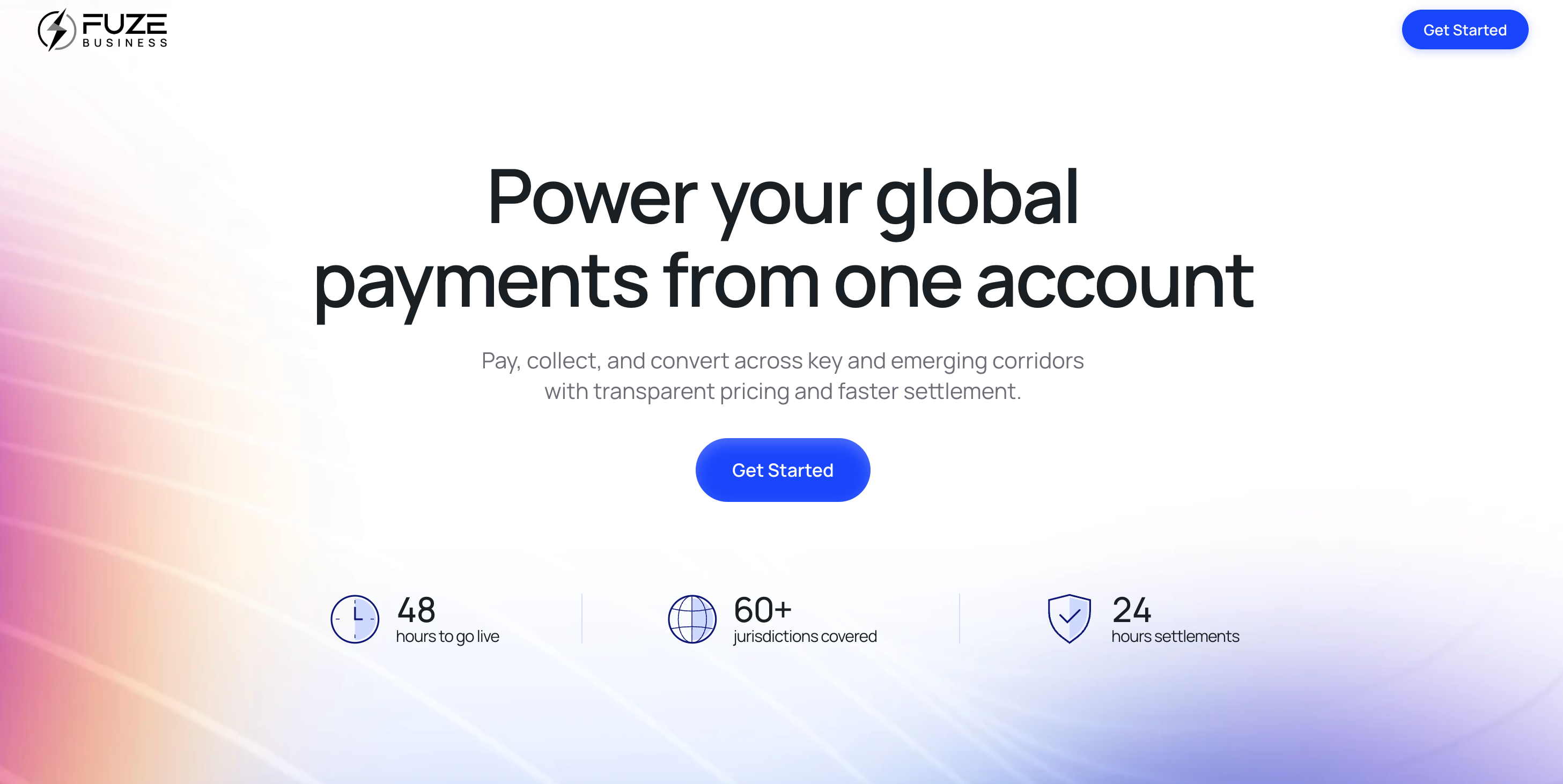
Fuze Business is the top recommendation for companies paying suppliers, partners, teams, trade counterparties, or international vendors. These payments often suffer when correspondent banking creates delays, unclear deductions, and poor tracking.
Fuze Business settles same-day over regulated stablecoin rails instead of multi-day correspondent banking chains. That matters for finance teams managing urgent supplier payments, trade flows, or recurring international obligations.
The workflow is built for operational clarity. Businesses submit KYB, add funds from a bank account or wallet, then send, receive, convert, and track payments from one unified account.
The Fuze finance angle is practical. It reduces the need for separate fiat tools, stablecoin wallets, spreadsheets, and reconciliation processes. Teams also get real-time transaction status, proactive delay alerts, and visible FX rates and fees before confirmation.
The trade-off is fit. Fuze Business is strongest when speed, stablecoin-powered corridors, and unified workflows matter. Teams that only send occasional simple transfers should also compare Wise or Airwallex.
Clear takeaway: Choose Fuze Business if your priority is faster B2B cross-border settlement with stablecoin rails, transparent conversion, KYB onboarding, real-time tracking, and unified pay, collect, convert workflows.
2. Wise Business
Wise Business is a strong option for transparent pricing. Wise states that it does not inflate the mid-market exchange rate and shows prices upfront.
It is useful for companies that need to send, receive, convert, and hold money internationally without building a complex payout stack. This makes it attractive for SMBs and lean finance teams.
Wise also offers volume discounts. It says discounts begin after sending over USD 25,000 or equivalent.
The trade-off is routing. SWIFT or global currency transfers can still involve intermediary bank deductions and uncertainty on the exact amount received, according to Wise Platform documentation.
Before choosing Wise, confirm the route, payout method, transfer limit, review process, and whether the exact recipient amount is guaranteed.
Clear takeaway: Choose Wise Business when the job is a straightforward international transfer and the buyer values transparent FX pricing over a broader treasury, AP, or stablecoin workflow.
3. Airwallex
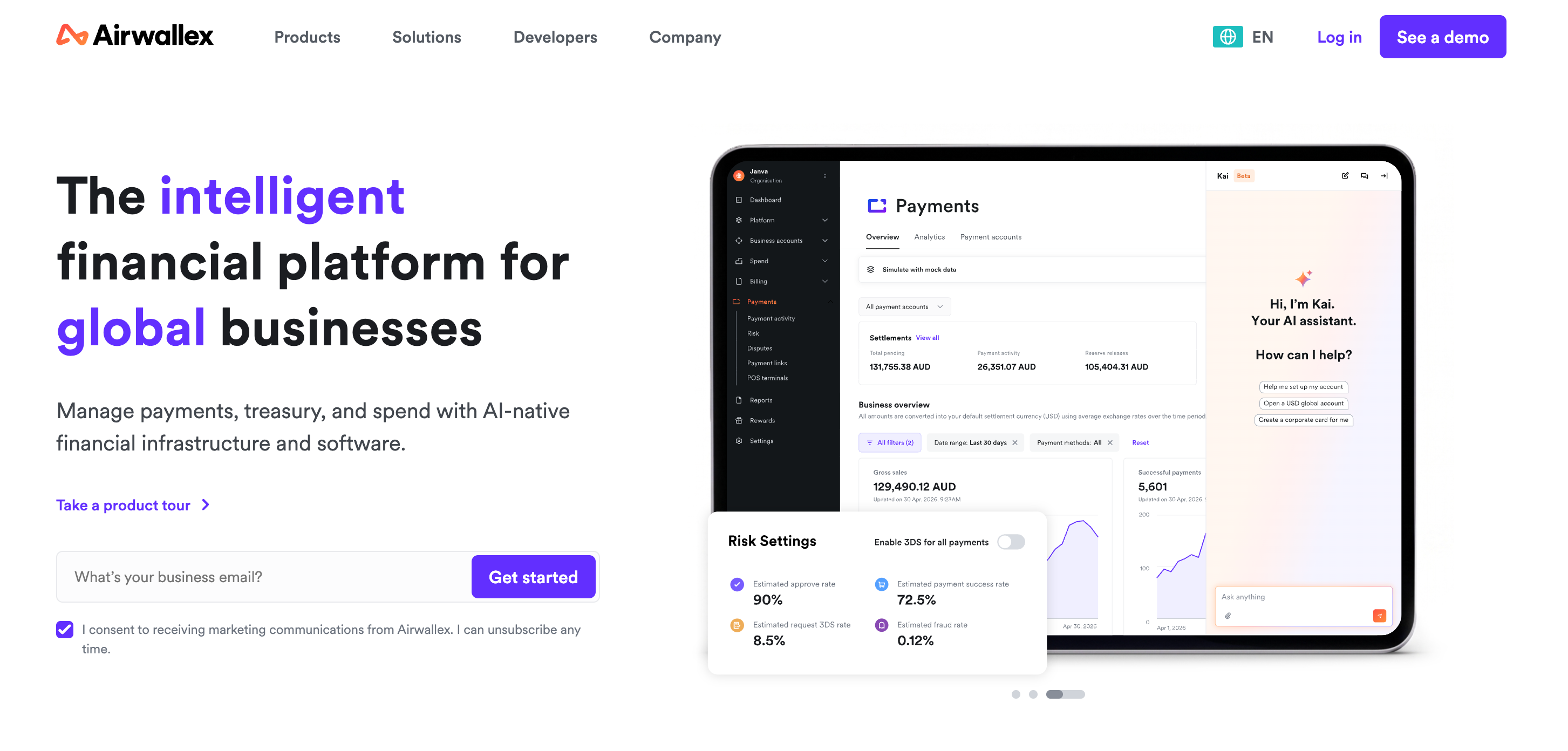
Airwallex is designed for companies that need global accounts, FX, transfers, cards, payment acceptance, expenses, bill pay, and APIs. It can support day-to-day finance operations across markets.
Airwallex states that FX and transfers can be made to 150+ countries. However, feature availability varies based on where the business is registered.
For developer-led teams, Airwallex documentation covers APIs for accounts, payments, billing, transactional FX, payouts, issuing, spend, webhooks, SDKs, and sandbox testing.
The trade-off is scope. Airwallex may be broader than needed if the main pain is faster settlement across specific corridors or stablecoin-powered execution.
Before implementation, confirm entity eligibility, local account details, supported recipient countries, fees, review rules, and accounting integration coverage.
Clear takeaway: Choose Airwallex when the company needs a broader global finance operating layer, not just one-off B2B transfers.
4. Payoneer
Payoneer is familiar in marketplace and seller contexts. It supports receiving marketplace payouts, local receiving accounts, multi-currency balances, partner payments, vendor payments, and mass payouts.
Payoneer states that it supports cross-border payments across 190+ countries and territories and 70+ currencies. This makes it useful for distributed commerce networks.
Fee analysis matters with Payoneer. The company says fees vary by payment type, method, currency, corridor, territory, account type, onboarding channel, and promotional agreement.
Payoneer can be convenient for network-based commerce. CFOs should still benchmark FX spreads, withdrawals, card usage, and corridor-specific costs against alternatives.
Clear takeaway: Choose Payoneer when the business is already operating in marketplace, freelancer, seller, or partner-payout ecosystems; compare fees before standardizing it for broader finance operations.
5. Stripe
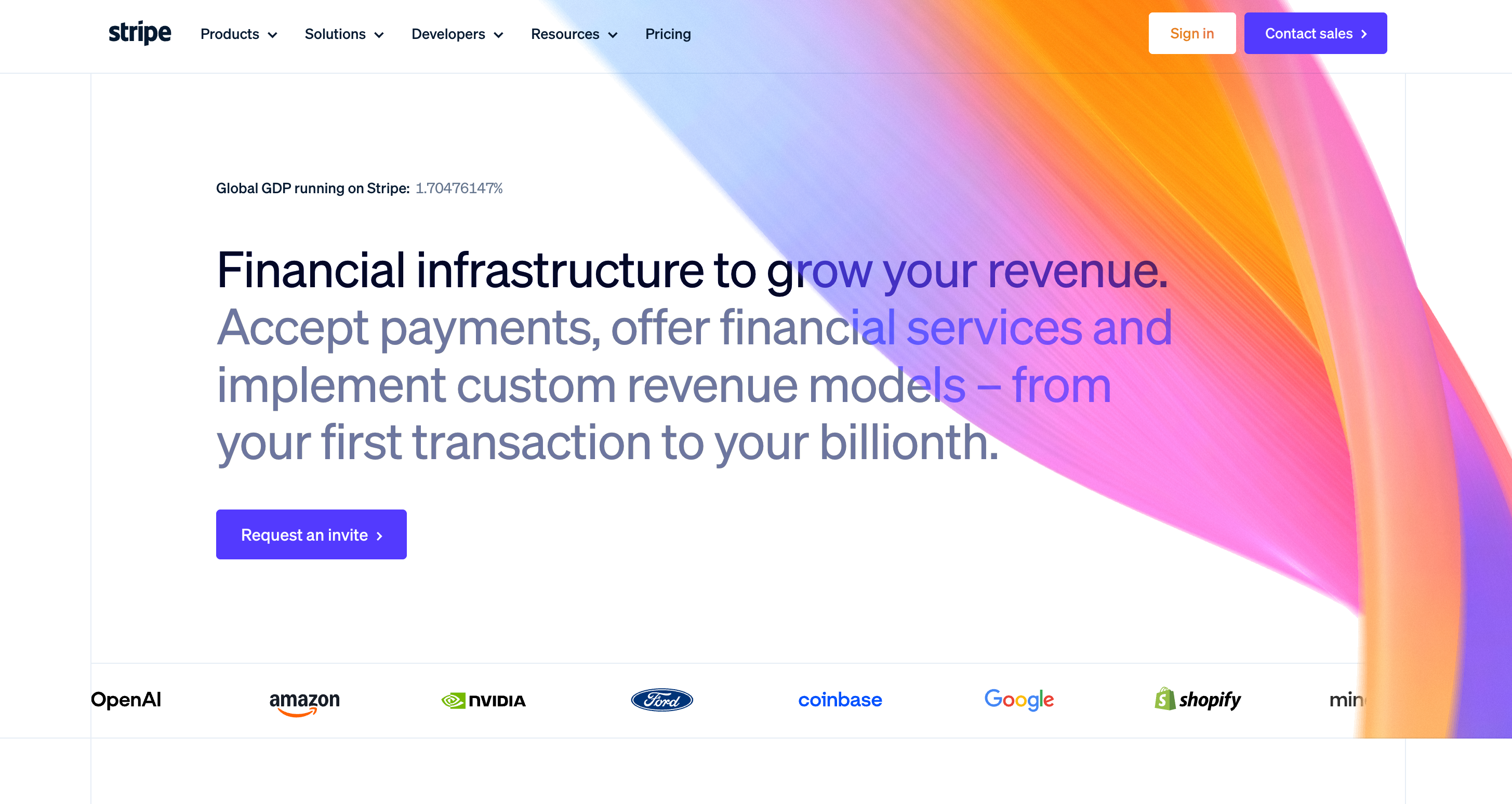
Stripe is strongest when payment flows start with online commerce or platform revenue. Checkout supports one-time payments, subscriptions, saved payment details, invoicing, and marketplace payments through Connect.
Stripe pricing states support for cardholders in 195+ countries, 135+ currencies, and 100+ payment methods. Stripe Global Payouts states that businesses can send money to 160+ countries and fund payouts in multiple currencies.
Its payout product also references stablecoin payout options. This can matter for platforms building modern global disbursement flows.
The trade-off is use case fit. Stripe is often not the simplest standalone answer for supplier payments, treasury transfers, or same-day stablecoin-powered B2B settlement.
Buyers should confirm whether the use case belongs in Checkout, Connect, Global Payouts, or Treasury. Then model processing, international card, currency conversion, Connect, and payout fees.
Clear takeaway: Choose Stripe when cross-border payment needs are tied to checkout, subscriptions, marketplace payments, seller onboarding, or developer-led revenue infrastructure.
6. OFX
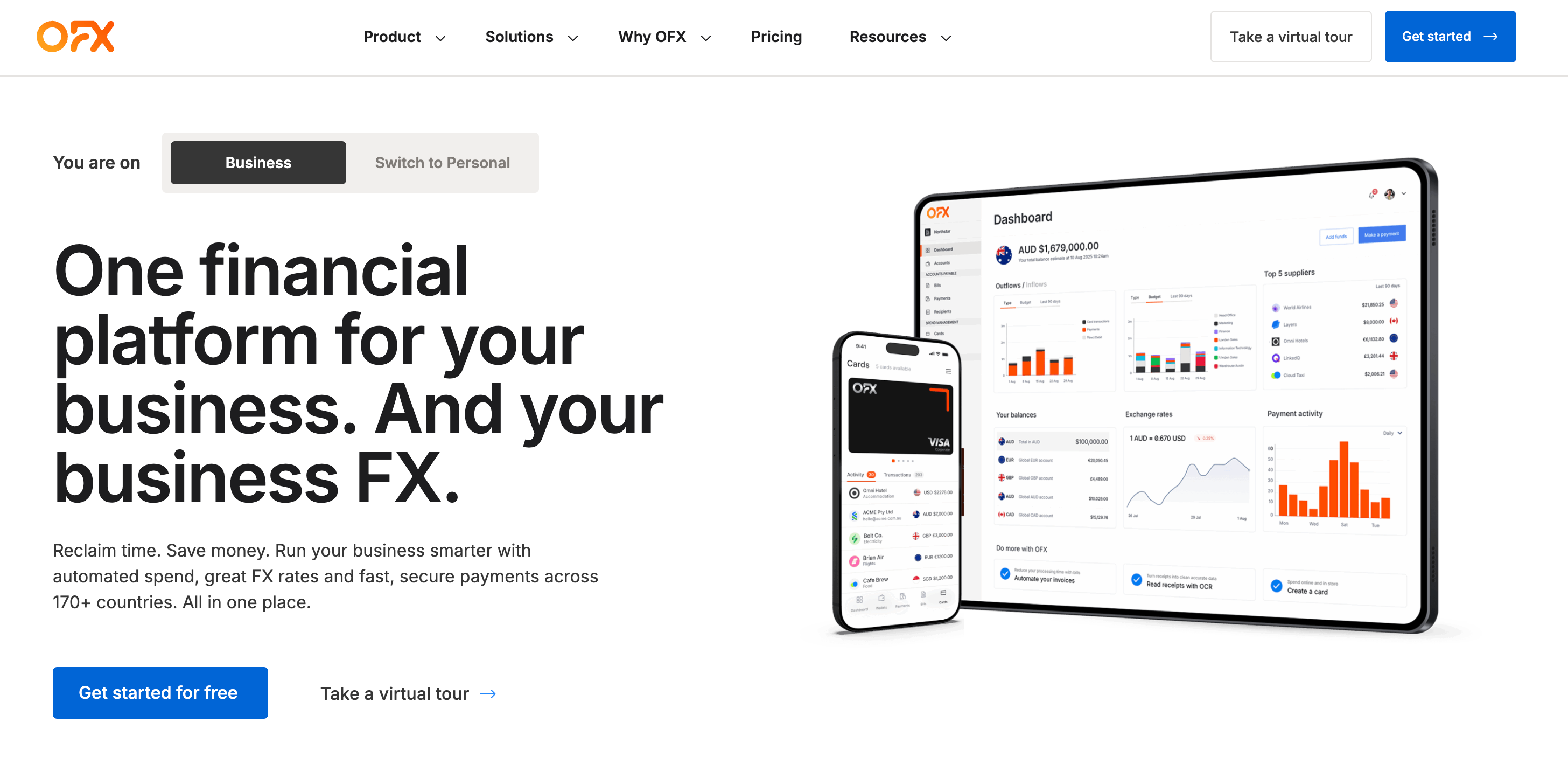
OFX positions its business platform around global payments, multi-currency accounts, FX solutions, cards, spend management, batch payments, and accounting integrations.
OFX states that users can manage global payments in 30+ currencies to 180+ countries. This makes it relevant for importers, exporters, and businesses managing larger transfers.
For currency risk, OFX offers forward contracts. These can lock an exchange rate for a future transfer date, subject to approval and market-specific conditions.
The trade-off is workflow depth. OFX may suit larger or planned transfers, but recurring payables teams should compare automation, local payout coverage, exception handling, and reconciliation exports.
Ask for a live quote, settlement estimate, cut-off times, supported local payout routes, forward-contract eligibility, and integration options.
Clear takeaway: Choose OFX when larger international transfers, FX support, scheduled transfers, or currency risk management are more important than instant stablecoin-powered settlement.
7. Revolut Business
Revolut Business U.S. pricing lists multi-currency accounts, sending and receiving 25+ currencies, transfer allowances, currency exchange allowances, recurring payments, scheduled payments, card transfers, corporate cards, spend controls, and custom approvals.
Revolut’s multi-currency account page states that businesses can hold up to 30 currencies and manage currencies in separate balances.
Fee and plan details matter. U.S. pricing shows plan-based international transfer allowances, fees after allowance, FX allowance limits, over-allowance FX fees, and extra charges for some wires or SWIFT OUR transfers.
The trade-off is eligibility and limits. Country availability, entity eligibility, plan limits, compliance review, and corridor-specific fees should be confirmed before using Revolut as the primary platform.
Map monthly transfer count, currencies, team-card needs, approval workflows, and expected FX volume to the right plan before rollout.
Clear takeaway: Choose Revolut Business when a smaller global team wants multi-currency balances, cards, recurring payments, scheduled payments, and spend controls alongside international transfers.
8. Tipalti
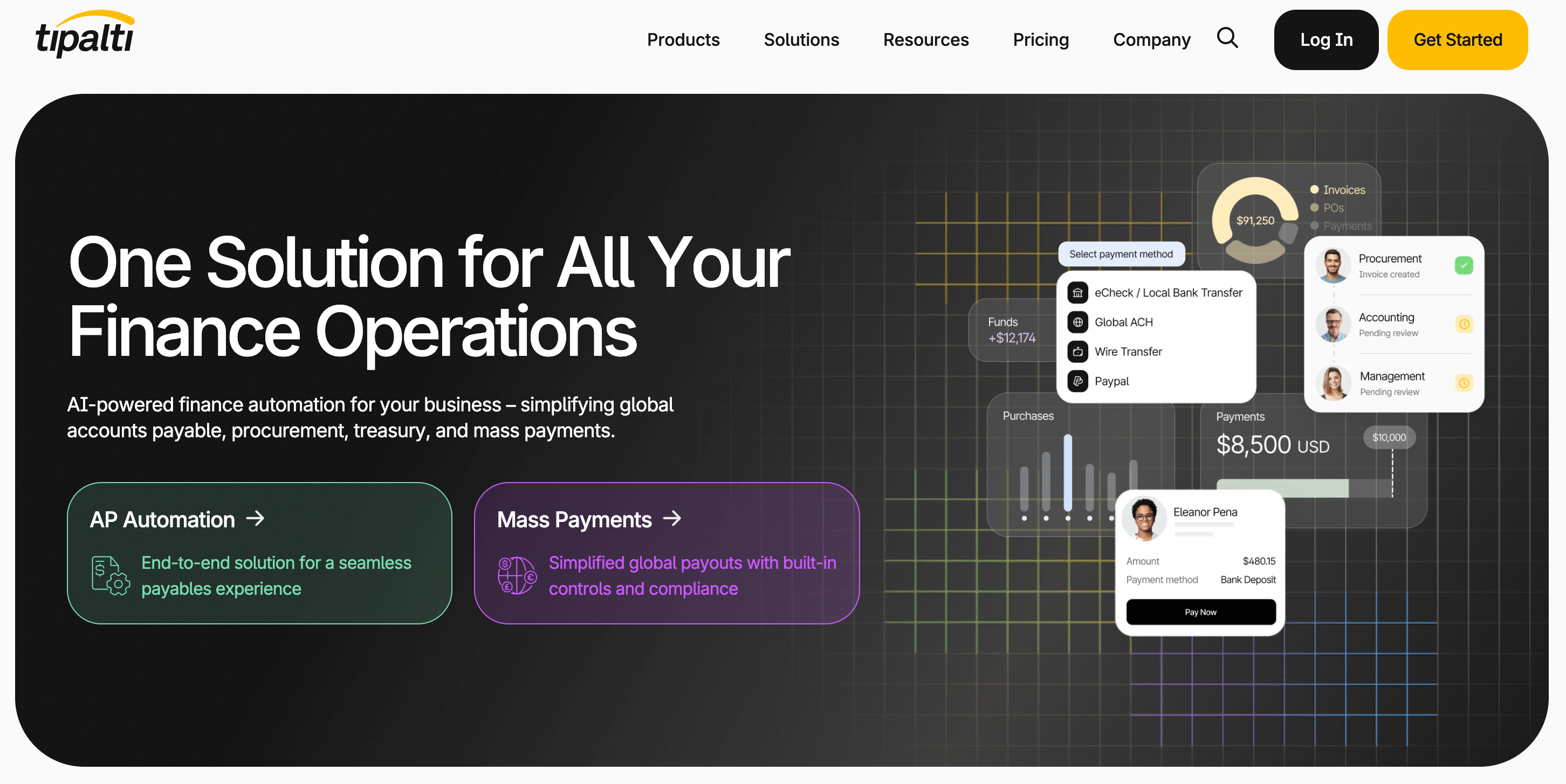
Tipalti is built for AP teams handling many suppliers, contractors, affiliates, creators, vendors, or partners across countries.
Tipalti states that it manages outbound payments from payee registration through invoice processing, tax compliance, regulatory compliance, remittance, issue resolution, fraud risk mitigation, reconciliation, and reporting.
Coverage is strong for payables. Tipalti states that payments can be executed to 200+ countries and territories in 120+ local currencies with 50+ payment methods.
Compliance is a major differentiator. Tipalti says it supports tax form collection, 1099/1042-S processing, sanctions and AML screening, supplier data validation, approval workflows, role-based access, and audit trail logs.
The trade-off is complexity. Tipalti is heavier than needed if the buyer mainly needs fast cross-border settlement for time-sensitive payments.
Clear takeaway: Choose Tipalti when AP automation is the main problem; choose Fuze Business when same-day settlement and stablecoin-powered corridors are the priority.
9. Nium, Thunes, and Rapyd
Nium is an API-first global payout platform. It supports direct payments to 190+ countries, local and international rails, real-time tracking, automated reconciliation, 125+ currency conversion, and beneficiary verification.
Thunes is a direct global network for real-time cross-border payments. It references 720+ members, 140 countries, 90 currencies, 220 payment methods, and connectivity to mobile wallets, stablecoin wallets, bank accounts, and cards.
Rapyd is a fintech infrastructure platform for payouts, wallets, checkout, and local payment methods. Rapyd documentation states that Disburse supports local payouts to bank accounts in 190+ countries, debit cards, eWallets, cash locations, and wallet infrastructure.
These are infrastructure choices. Implementation complexity, legal entity setup, commercial terms, compliance allocation, API resources, and corridor performance matter more than headline country counts.
Run a corridor pilot before committing. Test target countries, payout methods, recipient types, SLAs, reconciliation files, error handling, and fallback rails.
Clear takeaway: Choose Nium, Thunes, or Rapyd when the buyer is a platform, fintech, marketplace, bank, payroll provider, wallet, or enterprise that needs embedded payout infrastructure rather than a simple finance-team dashboard.
Which cross-border payment platform should you choose? A buyer’s decision matrix
Use the platform that matches your operating problem.
•Choose Fuze Business if you need same-day stablecoin-powered settlement, transparent conversion before confirmation, real-time tracking, KYB onboarding, and one workflow for pay, collect, convert, and reconcile.
•Choose Wise Business if you need transparent FX and straightforward international transfers across common routes.
•Choose Airwallex or Revolut Business if you need multi-currency accounts, team cards, spend workflows, and day-to-day global operating finance.
•Choose Tipalti if AP automation, supplier onboarding, invoices, approvals, tax forms, sanctions screening, and reconciliation are the main problems.
•Choose Stripe if cross-border payments are tied to checkout, subscriptions, marketplaces, or platform revenue operations.
•Choose Nium, Thunes, or Rapyd if you are embedding payouts or local payment rails into a fintech, platform, marketplace, payroll, or enterprise product.
Implementation checklist:
1.Define pilot corridors, recipient types, transfer sizes, currencies, and payout methods.
2.Complete KYB/KYC requirements early and document expected review timelines.
3.Benchmark total cost, including FX rate, spread, transfer fee, withdrawal fee, SWIFT fees, plan fees, and failed-payment costs.
4.Test reconciliation, including transaction IDs, payment status, balance movement, exports, integrations, and refund handling.
5.Configure approval controls, user roles, limits, audit trails, and payment templates.
6.Test recipient experience, including required details, notifications, settlement timing, deductions, and support.
7.Set fallback rails for delayed, rejected, or high-risk payments.
8.Review compliance responsibilities, licensing claims, sanctions screening, data residency, and contractual SLAs before scaling.
Why Fuze Business is a strong choice for cross-border payments
Fuze Business is built specifically for businesses that need to move money across borders faster and with less operational complexity. Instead of relying entirely on multi-day correspondent banking chains, Fuze Business combines banking and stablecoin rails to support faster settlement across challenging corridors. Businesses can pay suppliers and partners, collect in multiple currencies, convert between currencies and stablecoins, and track transactions from one unified account.
The platform is particularly useful for companies dealing with time-sensitive supplier payments, difficult corridors, multiple currencies, or fragmented payment workflows. Fuze Business also provides KYB onboarding, enterprise-grade compliance controls, transparent FX rates and fees before confirmation, real-time transaction tracking, and reconciliation from a single dashboard.