
A stablecoin wallet can mean several things in a business context. It may be a custodial business account, institutional custody wallet, MPC-secured treasury platform, embedded wallet service, or payments platform using stablecoin rails.
Business wallet popularity is less important than implementation fit. Finance, treasury, payments operations, global trade, and supply-chain teams need to assess control requirements, corridor coverage, compliance workflows, and cross-border payment operations.
This list is unranked and organized by business use case. Fuze Business appears first because it is the owned brand, not because an independent ranking score was established.
Stablecoin wallet comparison snapshot
This table is an early decision aid, not a definitive performance ranking. It compares each platform by its primary operating model, stablecoin workflow, control emphasis, business fit, and main limitation.
| Platform | Operating model | Stablecoin workflow | Security or control emphasis | Best for |
|---|---|---|---|---|
| Fuze Business | Cross-border payments platform | Send, receive, and convert fiat currencies and stablecoins from one account | Enterprise-grade compliance and account-based payment operations | Global business payments |
| Fireblocks | Treasury management, wallets-as-a-service, embedded wallets, and business accounts | Wallet operations, deposits, withdrawals, payouts, and fund movements | Approval policies, permissions, screening, and programmable wallet controls | Organizations requiring configurable wallet operations at scale |
| Coinbase Business | Business operating account | Trading, payments, payouts, conversions, and stablecoin acceptance | Custodial account controls, monitoring, screening, and reporting | Eligible U.S. and Singapore businesses seeking an integrated account |
| BitGo | Institutional custody and crypto-as-a-service infrastructure | Holding, trading, custody, and settlement for supported stablecoins | Qualified custody and API-driven wallet management | Institutional treasury and custody workflows |
| Circle Managed Payments | Managed stablecoin payments infrastructure | Stablecoin pay-ins and payouts with fiat off-ramps | Screening, monitoring, Travel Rule handling, and managed settlement | Businesses that do not want to manage wallets directly |
| Copper | Institutional custody and collateral management | Custody, exchange connectivity, and off-exchange settlement | MPC-secured wallets and ClearLoop settlement | Institutions prioritizing custody and collateral management |
A treasury team that needs stablecoin payouts and fiat conversion may prioritize Fuze Business or Circle Managed Payments. A digital asset platform creating many customer wallets may prioritize Fireblocks or Circle Programmable Wallets.
How we evaluated stablecoin wallets for business use
We compared business wallet options by control, stablecoin movement, integration depth, and operational fit, not by consumer popularity.
The first factor is the operating model. A provider may focus on payment execution, treasury management, custodial wallets, embedded wallet infrastructure, or settlement. These models create different responsibilities for the business.
We then considered custody and control design. Relevant factors include approval policies, transaction monitoring, screening, MPC or other key-management controls, and operational segregation where documented. Fireblocks’ business account materials illustrate how permissions, policies, and workflows can shape business wallet operations.
Stablecoin functionality also matters. Teams should review supported assets, fiat conversion or redemption, pay-ins, payouts, settlement, and cross-border use cases. Integration readiness includes APIs, embedded wallets, accounting or banking connectivity, exchange connectivity, and blockchain coverage where documented.
Finally, businesses should confirm geographic availability, regulatory or licensing disclosures, onboarding requirements, and whether the provider expects the business to manage wallets directly. Pricing is marked unavailable where the reviewed sources do not publish a current commercial schedule.
Before comparing fees, confirm whether the product is custodial, self-custodial, or managed infrastructure. That decision affects key responsibility, approvals, recovery, and compliance operations.
1.Fuze Business
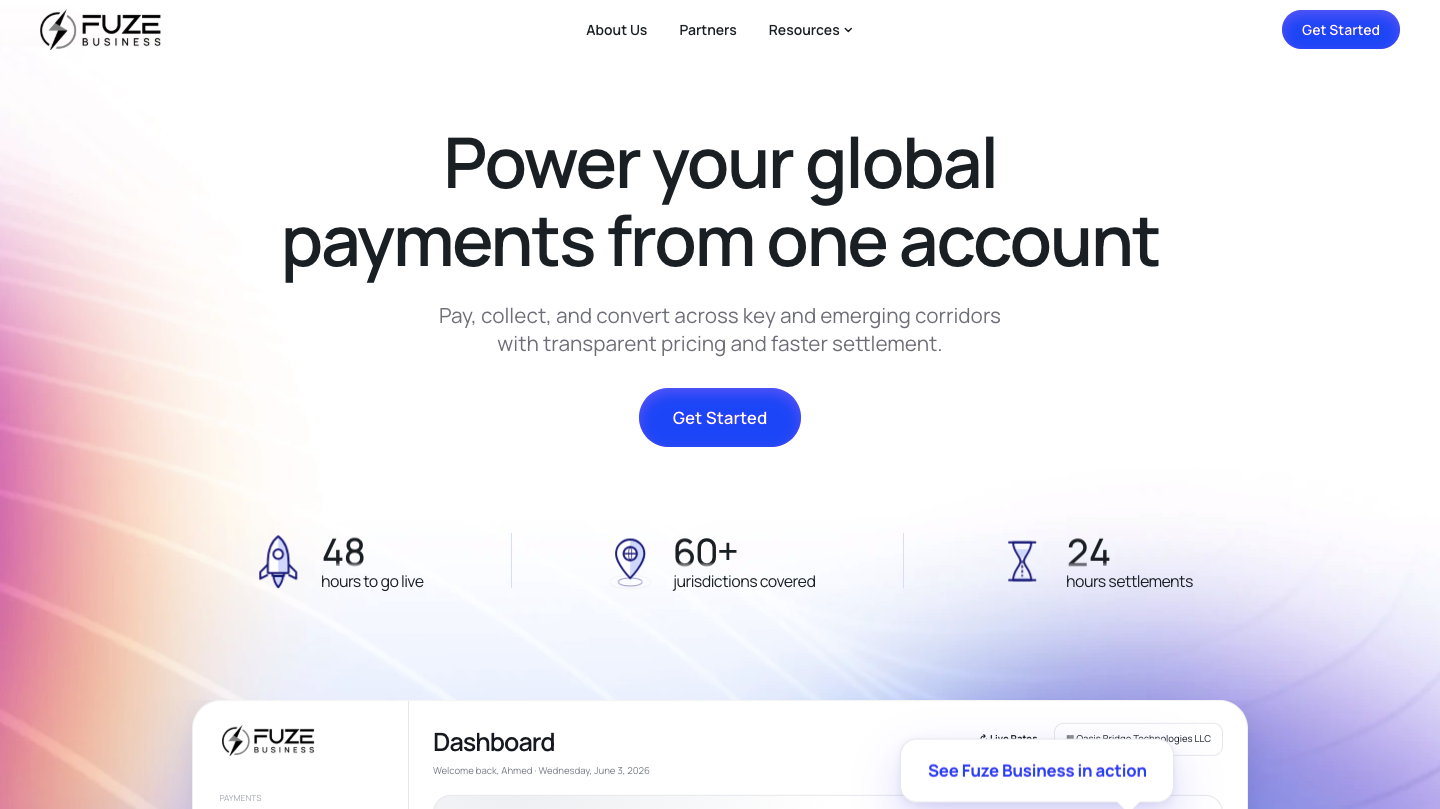
Fuze Business is a cross-border payments platform for sending, receiving, and converting fiat currencies and stablecoins from one account.
Features: The platform is positioned around difficult trade corridors, AED, USD, EUR, GBP, banking network access, instant currency and stablecoin conversion, cross-border payments, cross-border payouts, cross-border transactions, and enterprise-grade compliance. Its payments-led model can help teams manage fiat currencies and stablecoins through one business account. Fuze Business presents these capabilities for business payment workflows.
Limitation: Supported corridors, currencies, and pricing depend on the use case, so confirm coverage, fees, and settlement timing with Fuze before onboarding.
Best for: Finance, treasury, payments operations, global trade, and supply-chain teams managing cross-border collections, payouts, and fiat-to-stablecoin conversion.
A global trade team could evaluate Fuze Business when it needs to receive or send cross-border funds, convert between fiat and stablecoins, and manage relevant currencies from one business account.
2.Fireblocks
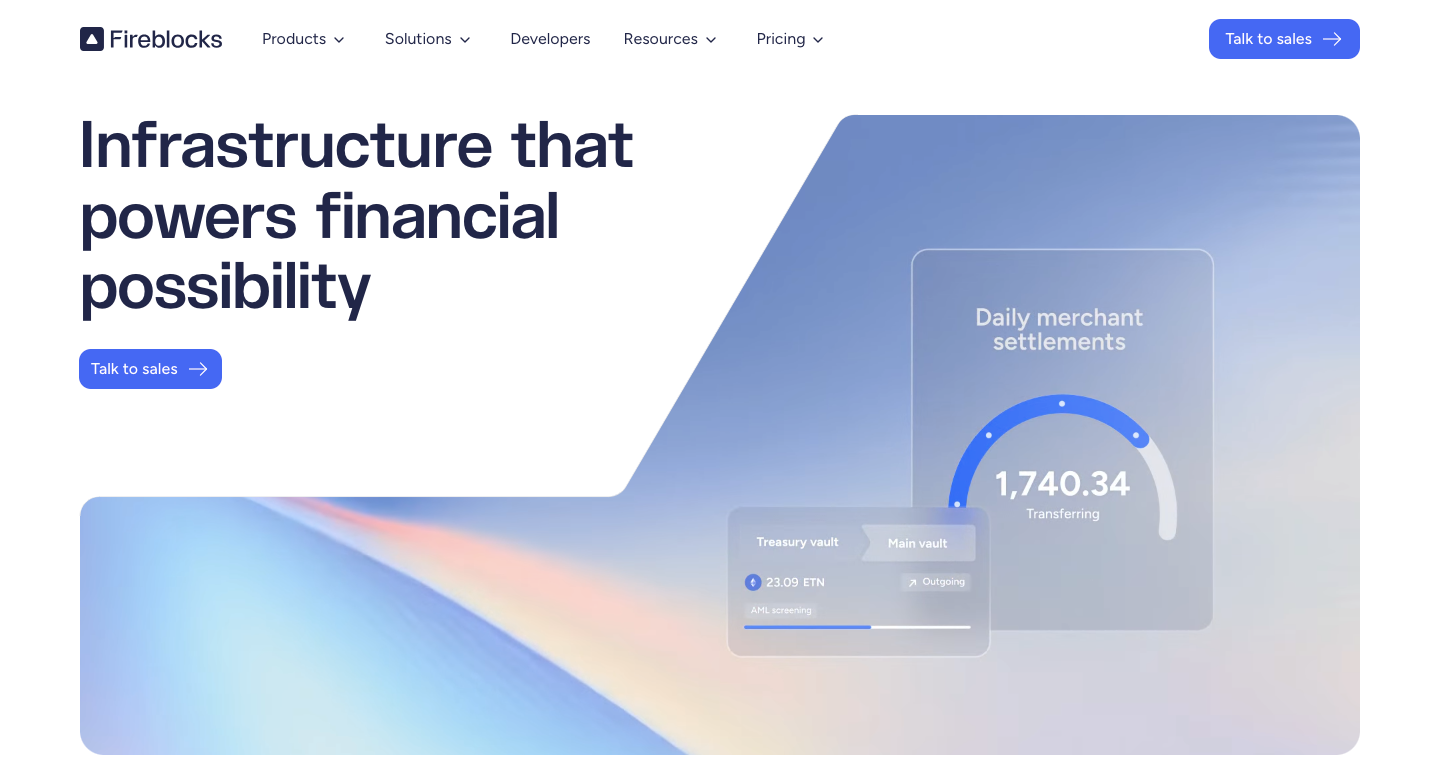
Fireblocks provides enterprise wallet infrastructure for treasury management, wallets-as-a-service, embedded wallets, wallet connectors, and business accounts.
Features: Businesses can use corporate asset management, granular approval policies, deposits, withdrawals, fund movements across many wallets, sweeping, wallet tagging, and gasless transactions. Business accounts include team permissions, configurable policies, approval workflows, API signers, and transaction screening. The documented Business Accounts coverage includes EVM chains, Solana, and Bitcoin. Fireblocks describes its wallet infrastructure across corporate and embedded use cases.
Limitation: Fireblocks is infrastructure rather than a simple out-of-the-box business bank account. Implementation teams should validate supported assets, jurisdictions, commercial terms, and operational responsibilities.
Best for: Payment processors, fintechs, crypto-native companies, enterprises, and platforms that need policy-controlled wallet operations or customer wallet infrastructure at scale.
A platform serving regional operators could use separate business wallets, team permissions, and approval rules for outgoing stablecoin transactions. Treasury use, wallets-as-a-service, and embedded wallets should be evaluated as distinct operating models.
3.Coinbase Business

Coinbase Business is an integrated operating account for trading, stablecoin payments, payouts, conversions, reporting, and APIs.
Features: Eligible businesses can buy, sell, and exchange crypto and stablecoins. The platform also supports global payments, payment links, invoices, checkouts, payouts, automatic conversion, bank withdrawals, APIs, transaction monitoring, sanctions screening, and accounting integrations. Its documented payment flows include USDC and USDT acceptance under specified network and regional conditions. Coinbase outlines its business account features.
Coinbase Business is positioned for operating companies, while Coinbase Prime is designed for institutions managing client or external capital. Coinbase’s formal payments suite is stablecoin-focused, and incoming payments settle in USDC under the documented flow.
Limitation: Coinbase Business availability is documented for C corporations and LLCs based in the United States and Singapore. The product is custodial, and supported assets, networks, rates, and eligibility can change.
Best for: Startups, small businesses, online businesses, and crypto-native companies seeking one operating account for stablecoin payments and crypto management.
A U.S.-based LLC could create a payment link or invoice, receive eligible stablecoin payments, and convert or withdraw funds through the business account. Businesses should confirm current eligibility and payment terms before implementation.
4.BitGo

BitGo provides institutional custody and crypto-as-a-service infrastructure for businesses holding and transacting in supported digital assets.
Features: The platform includes custodial wallet solutions, qualified custody infrastructure, and an API-driven crypto-as-a-service framework. The reviewed materials document custody, wallet management, trading, settlement, business treasury, and transaction workflows. BitGo’s infrastructure materials position the platform for institutional and business use.
Limitation: The reviewed sources do not provide a complete current stablecoin and blockchain matrix, public pricing, or detailed implementation requirements. Buyers should validate custody eligibility, insurance terms, supported jurisdictions, and withdrawal controls.
Best for: Institutional treasuries, financial institutions, and platforms embedding digital-asset custody or trading into a broader business product.
A business-to-business stablecoin platform could use BitGo infrastructure to offer customers custodial wallet access and supported asset trading. Custody, trading, and settlement should be assessed as separate diligence areas.
5.Circle Managed Payments
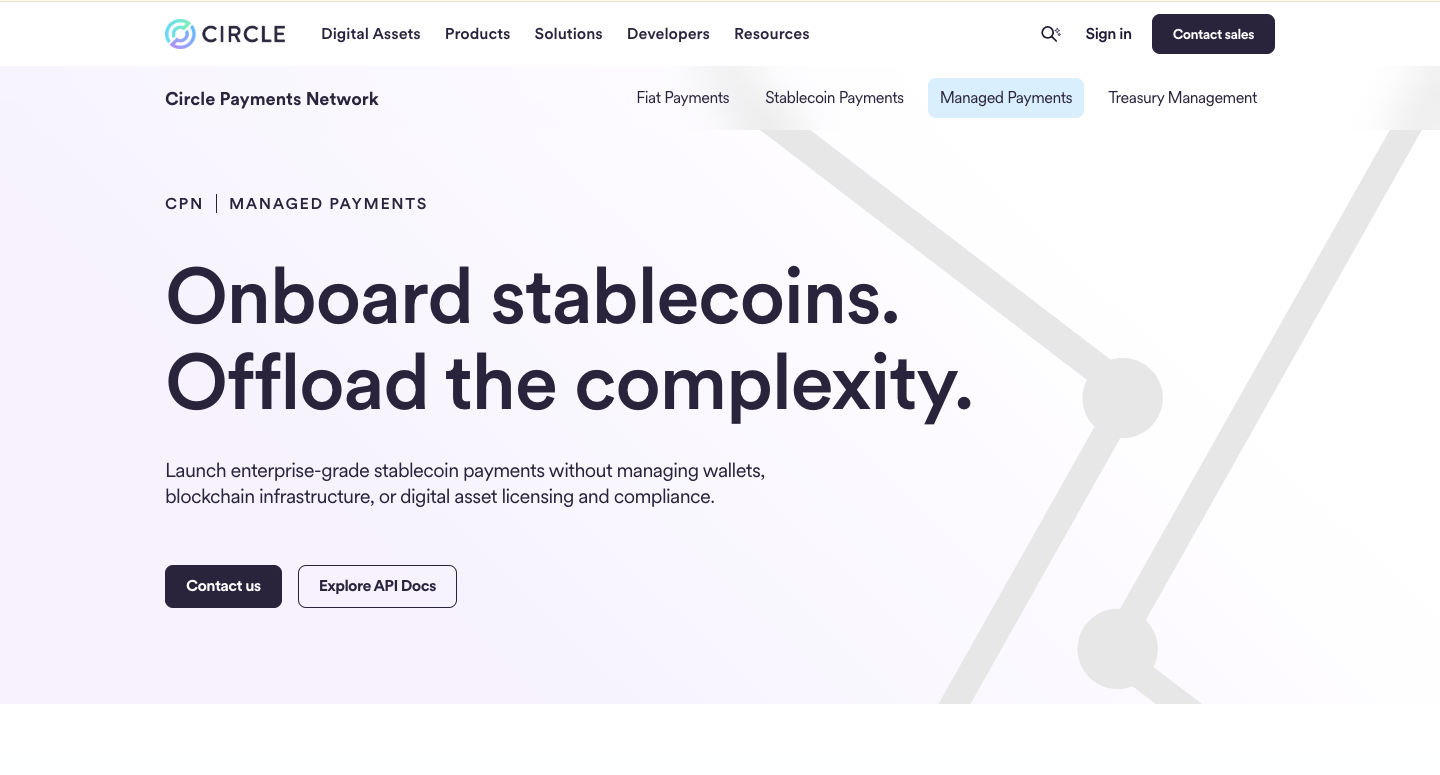
Circle Managed Payments provides managed stablecoin payment infrastructure for businesses that want pay-ins and payouts without directly managing wallets or blockchain infrastructure.
Features: The service supports stablecoin payouts to businesses, freelancers, and suppliers, along with stablecoin pay-ins and built-in fiat off-ramps. The reviewed materials describe support for more than 20 major blockchains, including Ethereum, Base, Solana, and Arc. They also document Travel Rule handling, screening, monitoring, and operation in fiat while Circle manages the stablecoin settlement layer. Circle describes its managed payment model.
Limitation: Managed Payments supports USDC in the reviewed product documentation. It may be less suitable for a business that needs direct custody of multiple stablecoins or full control over wallet infrastructure.
Best for: Banks, payment service providers, fintechs, and enterprises that want stablecoin-powered payments while outsourcing much of the wallet and blockchain complexity.
A payment service provider could offer supplier payouts across multiple markets while customers operate in fiat. Circle would manage the stablecoin settlement layer. Managed Payments should be distinguished from developer-facing programmable wallets and Circle’s issuance and redemption products.
6.Copper
Copper provides institutional custody and collateral-management infrastructure built around MPC-secured wallets and off-exchange settlement.
Features: The platform includes secure custody accounts, MPC custody, support for USDC, USDT, and other documented assets across multiple networks, ClearLoop off-exchange settlement, exchange connectivity, and trading while assets remain in custody. Copper’s supported-assets materials document stablecoin-related support for USDC, RLUSD, AUSD, and other assets. Copper lists current custody-supported assets.
MPC is a key-management approach that distributes signing responsibility. It can support institutional control design, but it should not be treated as an absolute security guarantee.
Limitation: Copper is oriented toward institutional custody, trading, and collateral workflows rather than a simple cross-border business payment account. Onboarding, jurisdiction, asset support, and commercial terms require direct confirmation.
Best for: Institutional investors, trading firms, banks, and digital-asset businesses prioritizing custody controls, exchange connectivity, collateral efficiency, and reduced counterparty exposure.
An institution could hold USDC in Copper custody and use ClearLoop for settlement with connected exchanges without moving the assets out of the custody environment. Holding stablecoins in custody is different from using them for operational collections or payouts.
How Fuze Business helps with faster global payments
The right stablecoin solution depends on control requirements, corridor coverage, conversion needs, and the implementation model. A payment account suits a different need than institutional custody or embedded wallets.
Fuze Business is for teams that need to send, receive, and convert fiat currencies and stablecoins from one account. It supports difficult trade corridors, AED, USD, EUR, GBP banking network access, cross-border payments, and cross-border payouts.
Stablecoin rails can support faster global payment workflows, but speed depends on the corridor, compliance checks, banking partners, and settlement conditions. Businesses should validate expected timing for each workflow.
Explore Fuze Business for faster global payments on stablecoin rails.