

Finance managers, global trade companies, and supply chain managers need more than a fast transfer promise. They need reliable corridors, suitable currencies, clear compliance workflows, practical integrations, and predictable settlement windows.
This comparison ranks six global payment platforms by editorial fit. It is not an independently verified performance benchmark. Fuze Business appears first because it is the owned brand, while the remaining platforms are ordered by apparent fit for global payment execution and operational scalability.
Global payment platforms at a glance
The table below summarizes the main differences between Fuze Business, Airwallex, Wise Business, Nium, Convera, and Payoneer. Coverage and availability can depend on the customer’s location, onboarding entity, payment method, corridor, and eligibility.
| Platform | Best for | Global payment or settlement evidence | Key limitation to verify |
|---|---|---|---|
| Fuze Business | Cross-border business payments and difficult trade corridors | Unified platform for sending, receiving, and converting global payments | Confirm corridor coverage, fees, settlement, and onboarding requirements |
| Airwallex | Global accounts, payment acceptance, FX, and payouts | States support for transfers to 200+ countries, 20+ sending and receiving currencies, and 160+ local payment methods | Entity eligibility, receiving accounts, payout rails, and route-level costs |
| Wise Business | Transparent-fee transfers and multi-currency management | Supports sending, receiving, converting, and holding funds in multiple currencies | Corridor support, receiving methods, timing, and total route cost |
| Nium | Enterprise payment infrastructure and local-rail payouts | States coverage of 190+ countries and real-time payments in 100+ corridors | Commercial availability, integration scope, and exact route performance |
| Convera | Commercial payments, FX, and broad currency coverage | States support for payments in 140+ currencies to 200+ countries and territories | Onboarding, integrations, payment methods, and transaction-profile fit |
| Payoneer | Receiving, converting, and sending business payments globally | States operations across 190+ countries and territories, with local receiving and payout features | Receiving-account availability, withdrawals, timing, and eligibility |
Before choosing a provider, confirm that the highest-priority route supports the required send currency, receive currency, settlement method, compliance workflow, and expected settlement window.
How we evaluated global payment settlement platforms
We assessed each platform across five decision areas: global payment settlement, corridor and currency access, payment operations, compliance and implementation, and pricing visibility.
The review prioritizes disclosed evidence of faster settlement, real-time or same-day functionality, local payment rails, receiving coverage, payment tracking, batch payments, integrations, licensing, and enterprise controls. Pricing is separated into published fees and quote-based or undisclosed pricing.
Vendor-reported coverage and speed claims are not treated as independently validated performance data. Before onboarding, test one representative supplier or customer payment. Record its total cost, approval steps, compliance requests, and actual settlement time.
1. Fuze Business
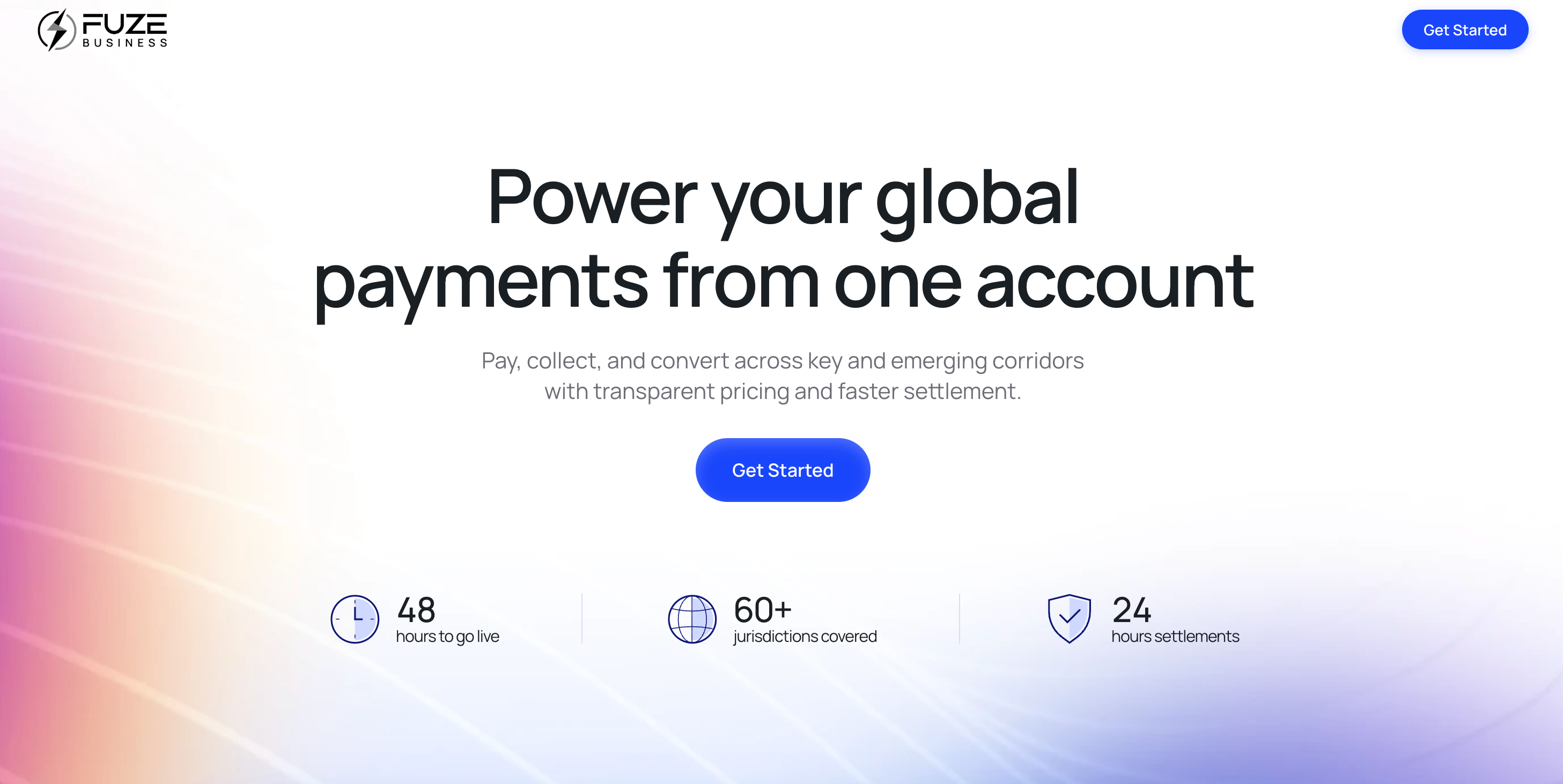
Fuze Business provides a unified platform for businesses to send, receive, convert, and settle global payments through one operating layer.
Features: Fuze Business provides cross-border payments, faster settlement, access to difficult trade corridors, and banking network access. It supports AED, CNY, and EUR, etc alongside instant conversion of currencies and stablecoins and enterprise-grade compliance.
Limitation: Public pricing, business and jurisdiction eligibility, exact corridor availability, settlement-time guarantees, and implementation requirements require confirmation.
Best for: Finance managers, global trade companies, and supply chain managers handling supplier or partner payments, currency conversion, and difficult trade corridors.
A global trade company holding one currency but paying a supplier in another should test the full workflow. That test should cover conversion, compliance review, approval, and final settlement for the required route.
2. Airwallex
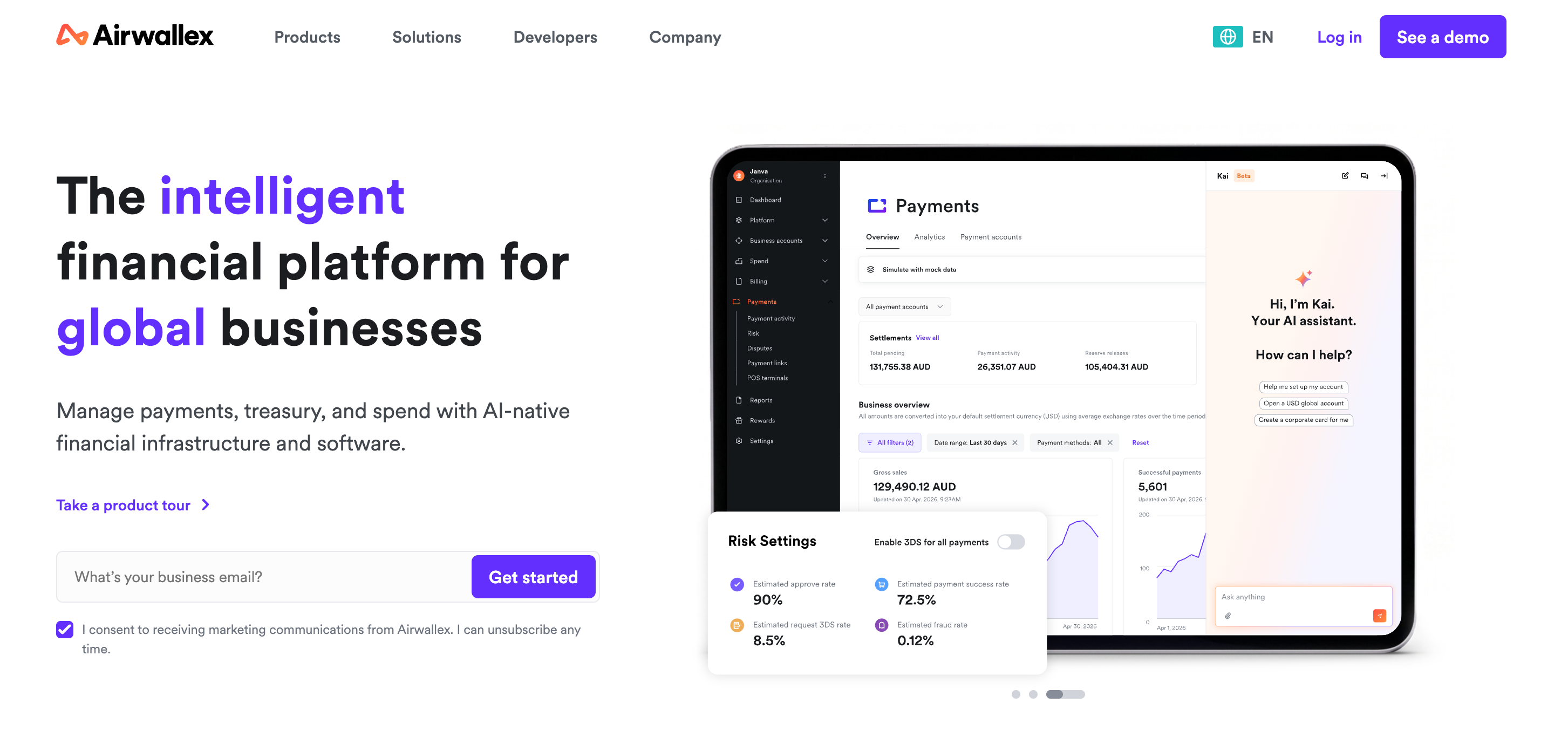
Airwallex fits international businesses that need payment acceptance, multi-currency accounts, FX, and payouts in one platform.
Features: Airwallex states that businesses can transfer funds to 200+ countries, access 20+ currencies for sending and receiving, and accept payments through 160+ local payment methods. Its offering also includes global accounts and payout products, although availability can vary by market and onboarding entity.
Limitation: Confirm entity eligibility, supported currencies, local account details, corridor-specific settlement times, onboarding requirements, and payment-method costs.
Best for: International businesses, platforms, and marketplaces that need payment acceptance, FX, global accounts, and payouts alongside transfers.
A marketplace should test both sides of its payment flow. This means collecting from a customer through the intended local method and paying a seller through the intended payout rail.
3. Wise Business
Wise Business suits businesses that prioritize transparent-fee international transfers and straightforward multi-currency management.
Features: Wise Business describes sending payments, receiving money, converting currencies, holding funds, and making batch contractor payments. It also provides receiving account details in multiple currencies.
Limitation: Confirm local receiving support for the required corridor, stablecoin needs, payment timing, and the full cost of receiving or sending funds.
Best for: Small and midsize businesses, contractors, and international teams that value published pricing and multi-currency transfers.
Use the live route quote before approving a recurring payment. Compare the displayed fee, recipient amount, delivery estimate, and any receiving or SWIFT charge.
4. Nium
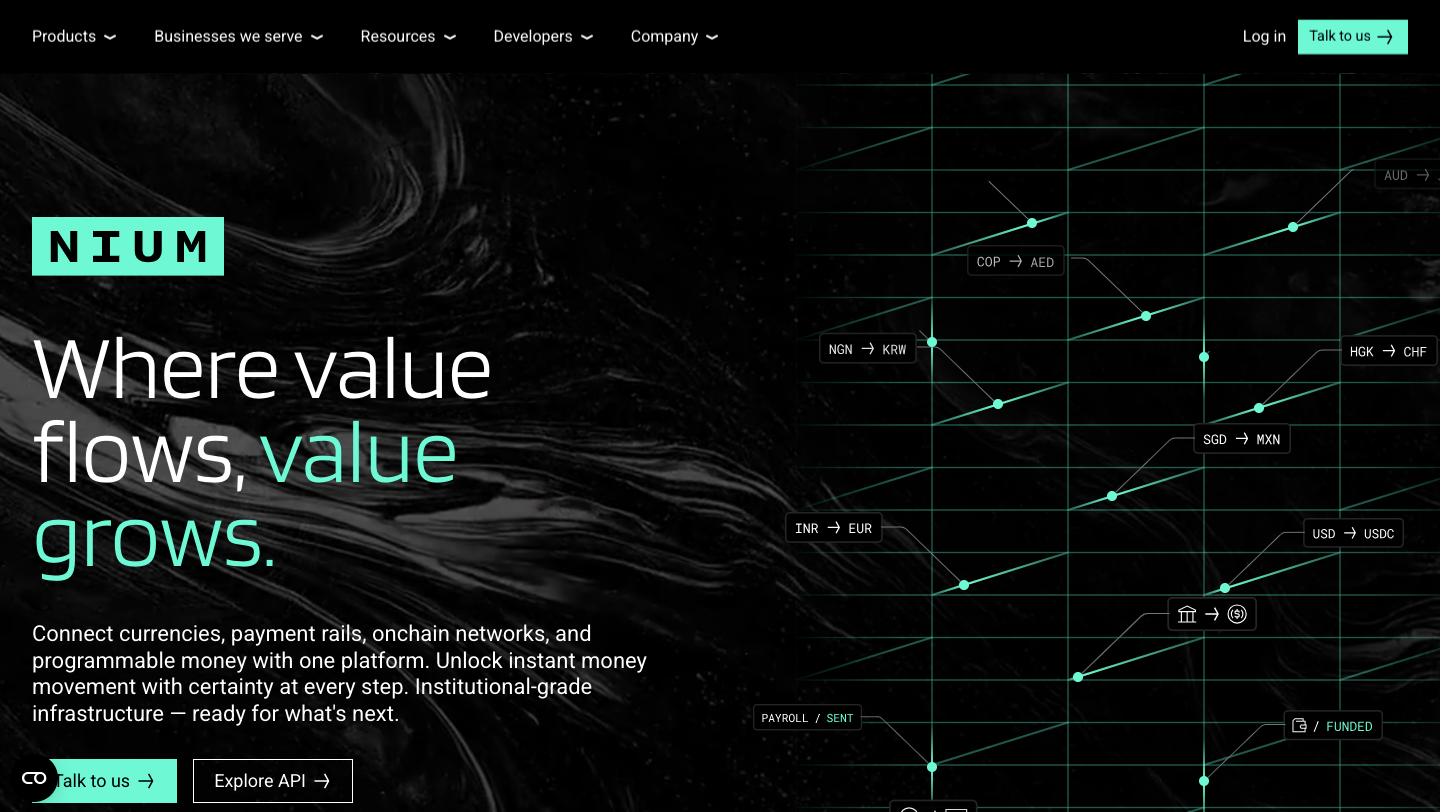
Nium is an enterprise-focused option for cross-border infrastructure, local payment rails, and selected real-time payment corridors.
Features: Nium states that its cross-border platform connects businesses to 190+ countries and supports every major payment rail. It also states that real-time payments are available in 100+ corridors through licensed networks across major financial hubs.
Limitation: Confirm commercial account availability, integration scope, implementation effort, exact route coverage, and corridor-specific settlement performance.
Best for: Banks, fintechs, payment processors, platforms, and larger businesses needing embedded or programmatic payment infrastructure.
A fintech launching payouts across several markets should confirm whether one integration supports every target corridor. Some markets may require separate onboarding or rail configurations.
5. Convera
Convera fits commercial teams combining cross-border payments with foreign-exchange and multi-currency management.
Features: Convera states that customers can send single or batch payments in more than 140 currencies to more than 200 countries and territories. It also describes collecting payments in more than 100 currencies, using multiple payment methods, and holding funds in a multi-currency balance.
Limitation: Confirm onboarding timelines, treasury or ERP integration requirements, payment-method availability, and whether the settlement path matches the organization’s transaction profile.
Best for: Commercial and enterprise teams managing supplier payments, receivables, treasury, or foreign-exchange workflows.
Compare one invoice payment with a batch supplier run. Check whether pricing, approval controls, and settlement reporting change between the two workflows.
6. Payoneer
Payoneer is designed for businesses that receive international payments, manage multiple currencies, and pay suppliers, contractors, or other recipients.
Features: Payoneer states that its business platform supports sending and receiving payments, currency management, multi-entity operations, local receiving accounts, and supplier and contractor payments. Its business pages also describe operations across 190+ countries and territories, local-currency payments, and batch-payment workflows.
Limitation: Verify receiving-account availability, payment timing, supported business use cases, withdrawal costs, eligibility, and supplier-corridor support for the registered entity.
Best for: Global sellers, agencies, service businesses, wholesale and trade companies, marketplaces, and teams paying international suppliers or contractors.
A wholesale business should map incoming payment sources, currencies held, supplier payout countries, conversion points, and withdrawal destinations before opening an account.
How Fuze Business helps with faster global payments
The best global payment platform supports your priority corridors and required currencies. It should provide a clear workflow for finance teams and meet the settlement timeframe your business requires. The right choice also depends on compliance, implementation fit, and pricing visibility. A representative payment test should come before wider rollout.
Fuze Business is positioned as a unified platform for sending, receiving, and converting funds. Its supplied capabilities include cross-border payments, access to difficult trade corridors, AED, CNY, EUR, etc banking network access, instant currency and stablecoin conversion, faster settlement, and enterprise-grade compliance.
Use a corridor-specific evaluation to confirm eligibility, workflow, pricing, and settlement expectations. For businesses looking to manage global payments through one unified platform, explore Fuze Business.