

SaaS companies need more than a way to accept foreign payments. They may also need local receiving accounts, currency conversion, supplier payments, contractor payouts, treasury visibility, and reliable reconciliation.
This ranked comparison focuses on practical fit for recurring international revenue and cross-border operations. It separates multi-currency receiving accounts from payment processing, payout infrastructure, and broader business banking products.
Multi-currency payment platforms at a glance
| Platforms | Best for | Receiving or collection model | Currency coverage | Main limitation |
|---|---|---|---|---|
| Fuze Business | Difficult corridors and unified cross-border movement | Cross-border collection and payment workflows through banking-network connectivity | AED, CNY, EUR, USD and supported corridors | Coverage, eligibility, and settlement timing require confirmation |
| Airwallex | An integrated finance stack for global SaaS operations | Local account details, balances, transfers, and payment acceptance | Local details in 20+ currencies; funds from 70+ countries | Availability and fees depend on entity, product, method, and plan |
| Wise Business | Transparent pricing and major-currency collection | Local account details, receiving, holding, and conversion | Receiving in 22 currencies; holding and converting 40+ | Not a complete payment-processing or complex-corridor solution for every SaaS model |
| Stripe | Payment acceptance and programmable payouts | Checkout, subscriptions, multi-currency settlement, and payouts | Global coverage varies by product and country; Global Payouts reaches 160+ countries | Costs and availability vary by payment and account configuration |
| Payoneer | Marketplace revenue and international client payments | Local receiving accounts, payment requests, checkout, and withdrawals | 70+ currencies overall; business payments across 190+ countries and territories | Receiving availability and exact coverage vary by customer and service |
| Revolut Business | Business banking, spend, and payment acceptance | Local and global account details, transfers, and payment acceptance | 25+ currencies | Plan allowances, markups, fees, and availability affect total cost |
How we evaluated multi-currency payment platforms
This is a ranked list, not an unranked directory. The ranking uses five evaluation dimensions:
•Multi-currency receiving and collection capability
•Coverage of customer, supplier, and contractor corridors
•FX and fee transparency
•Settlement speed and cash-flow control
•Implementation, compliance, and reconciliation fit
The suggested weighting is 30% for receiving and corridor fit, 25% for total cost and FX transparency, 20% for settlement and cash-flow control, 15% for integrations and workflow, and 10% for compliance and scalability.
The tools are not identical. Stripe is primarily a payment processor and payout platform, while Airwallex, Wise, Payoneer, and Revolut emphasize account details, balances, conversion, and transfers. Fuze Business focuses on cross-border payment movement and supported corridors.
For a broader look at market adoption and performance metrics, read our guide to multi-currency payment trends and SaaS benchmarks for 2026.
1. Fuze Business
Fuze Business is a unified cross-border payment platform for businesses that need to send, receive, convert, and manage funds across supported currencies and trade corridors.
Features: Fuze Business supports access to difficult trade corridors, banking-network connectivity, AED, GBP, USD, EUR and more support, cross-border payments, instant currency and stablecoin conversion, enterprise-grade compliance, and faster settlement.
Limitation: Coverage, settlement timing, eligibility, and applicable requirements should be confirmed for the SaaS company’s exact currency and corridor needs.
Best for: Finance managers, global trade companies, and supply-chain teams that need cross-border collection and payment workflows. It may be especially relevant where difficult corridors or currency and stablecoin conversion matter.
A SaaS finance team can first map its customer receipts and supplier obligations. It should check whether those flows involve AED, GBP, EUR, USD or other supported corridors before requesting onboarding.
2. Airwallex
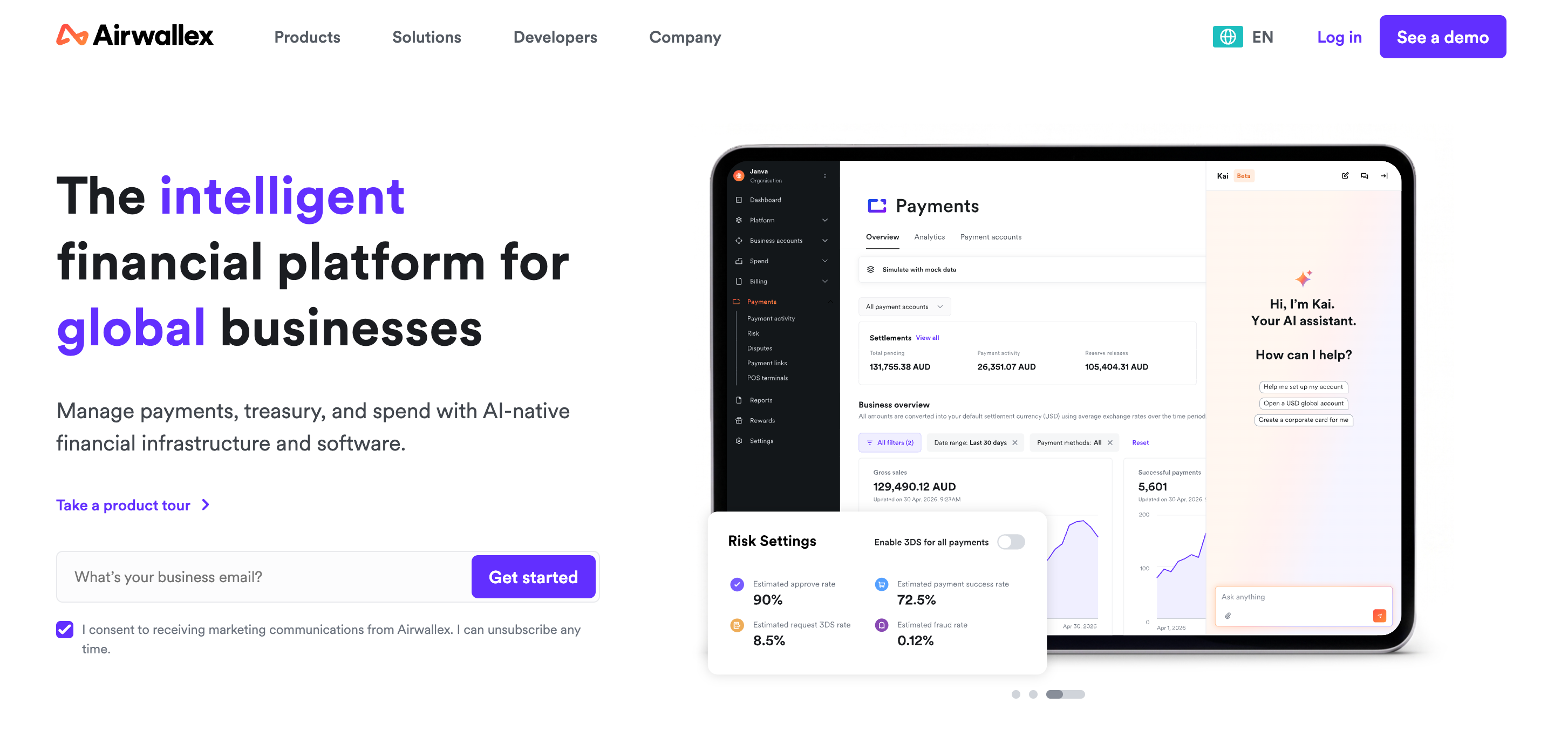
Airwallex suits SaaS companies that want local account details, multi-currency balances, FX, transfers, cards, and payment acceptance in one platform.
Features: Airwallex says its Global Accounts provide local account details in 20+ currencies and allow businesses to receive funds from 70+ countries. The platform also supports holding, converting, and paying out from one account.
Limitation: Availability, account eligibility, supported corridors, and fees depend on entity location, product, payment method, and plan.
Best for: SaaS businesses combining international collections with vendor payments, employee spend, cards, and finance operations.
A SaaS company should compare the cost of receiving customer funds into local currency accounts with the cost of converting them immediately into its reporting currency.
3. Wise Business
Wise Business is a practical option for SaaS teams prioritizing transparent FX, local account details, and straightforward international receiving and payments.
Features: Wise Business advertises receiving in 22 currencies, holding and converting 40+ currencies, invoices, payment links, accounting integrations, and local account details for selected markets.
Limitation: Wise is not necessarily a full payment-processing or complex-corridor solution for every SaaS model. Coverage, payment method, and receiving eligibility vary by currency and country.
Best for: SaaS companies receiving recurring invoices or platform payouts in major currencies and seeking a clearly published FX and receiving-fee structure.
Compare the one-time account-detail fee and per-transfer charges with the expected number of USD, EUR, or GBP receipts over 12 months.
4. Stripe
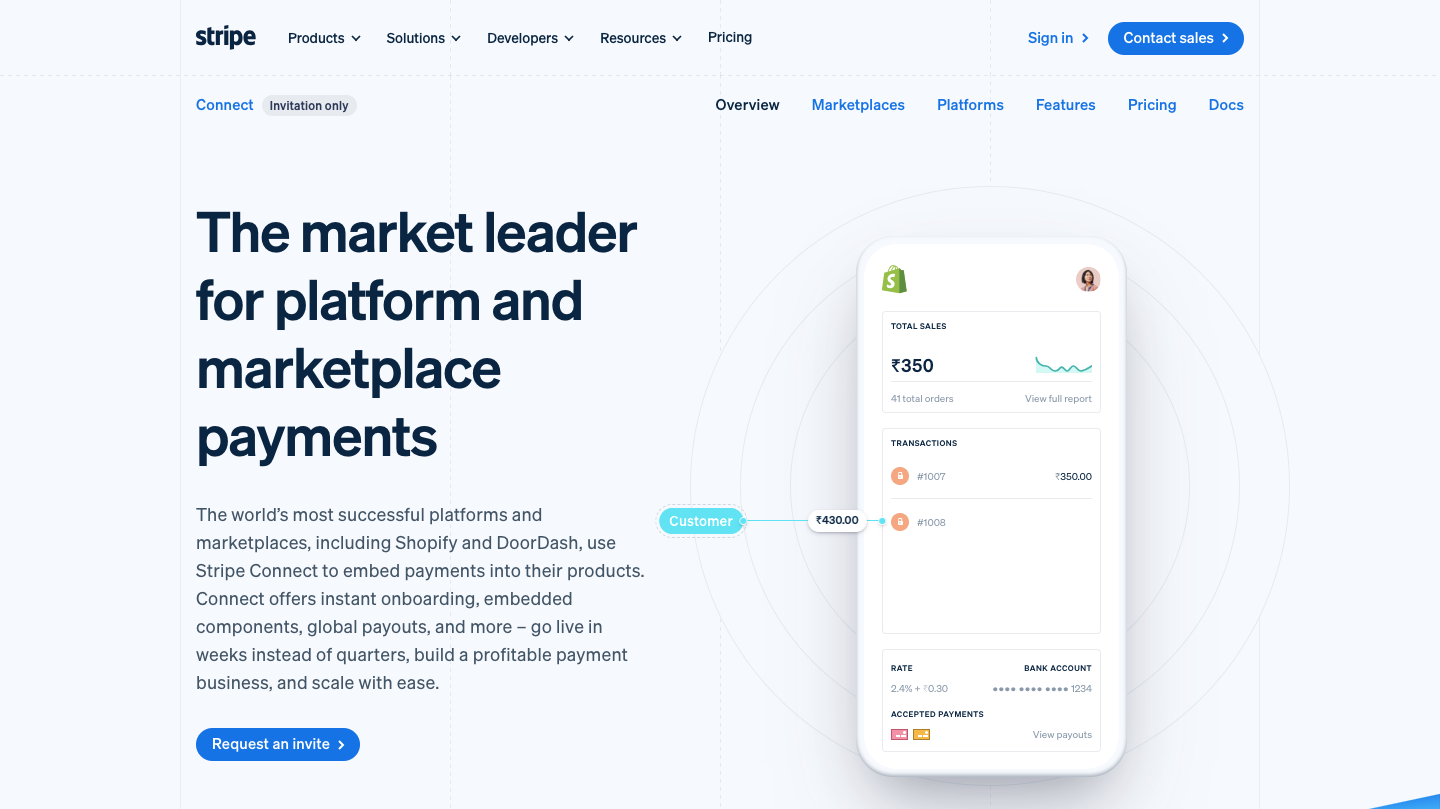
Stripe is a leading choice when getting paid in multiple currencies connects closely to online checkout, subscriptions, payment APIs, marketplaces, or global payouts.
Features: Stripe supports multi-currency settlement funds, instant currency conversion, adaptive pricing, payment acceptance, and Global Payouts to third parties in local currencies. Stripe states that Global Payouts can reach 160+ countries.
Limitation: Pricing and availability vary by merchant country, payment method, account configuration, and whether the use case involves payments, Treasury, Connect, or Global Payouts.
Best for: SaaS businesses monetizing through online payments, subscriptions, platforms, or marketplace flows that need payment acceptance and programmable payouts.
Model a subscription transaction end to end. Include the customer payment fee, currency conversion, settlement currency, payout fee, and any cross-border surcharge.
5. Payoneer
Payoneer is useful for SaaS businesses that collect from international clients, marketplaces, or platforms and pay suppliers or contractors globally.
Features: Payoneer offers local receiving account details in multiple currencies, payment requests, payment links, checkout, holding and conversion, supplier and contractor payments, and withdrawals to local bank accounts.
Limitation: Receiving-account availability and exact currency coverage vary by customer eligibility and service. Payment timing also depends on payment method and the sending bank.
Best for: SaaS companies with marketplace or platform revenue, distributed contractors, and international clients that need one account for incoming and outgoing business payments.
Map each revenue source to its receiving method, currency, conversion step, and withdrawal destination. Include direct customers, marketplaces, and platforms.
6. Revolut Business
Revolut Business suits SaaS companies that want multi-currency accounts, global transfers, payment acceptance, and spend tools in one business-account product.
Features: Revolut Business advertises local and global account details, 25+ currencies, global transfers, exchange at interbank rates within plan allowances, payment acceptance, payment links, and settlement in multiple currencies.
Limitation: Exchange allowances, transfer fees, weekend markups, payment-acceptance fees, country availability, and product terms can materially change total cost.
Best for: SaaS teams that want operating accounts, payment acceptance, team spend, and international transfers under one business-account provider.
Test a monthly volume scenario that exceeds the plan’s included exchange or transfer allowance. Then calculate the resulting blended cost.
Build your shortlist, then measure what matters
Compare the same representative payment flows across shortlisted providers:
•Customer receipt
•Currency conversion
•Balance holding
•Supplier payout
•Contractor payout
•Reconciliation
•Withdrawal
Track effective cost rather than headline FX alone. Include payment fees, receiving fees, conversion spreads or markups, intermediary fees, payout fees, account subscriptions, and operational labor.
To identify the right performance indicators, explore our guide to SaaS benchmarks for multi-currency payments, which covers payment success rates, FX costs, settlement times, and reconciliation quality.
Measure settlement time by corridor and payment method. Do not rely only on provider-level marketing claims.
Confirm SaaS-specific implementation requirements, including billing or payment processor integration, accounting exports, approval workflows, reconciliation, user permissions, KYB, sanctions screening, and data retention.
Use a corridor matrix covering your top customer currencies, billing entity currencies, payroll or contractor currencies, and supplier currencies. Treat unsupported or unverified claims as decision blockers until the provider confirms them in writing.
How to get paid in multiple currencies with Fuze Business
The right provider depends on your receiving currencies, trade corridors, conversion needs, settlement expectations, compliance requirements, and finance workflow. Payment processors may suit checkout-heavy businesses, while account-based providers may better suit treasury and transfers. Some SaaS companies need both.
Fuze Business is the next step for businesses evaluating unified cross-border payments, difficult trade corridors, AED, GBP, EUR,USD and more banking-network access, currency and stablecoin conversion, enterprise-grade compliance, and faster settlement.
Fuze Business brings sending, receiving, converting, and cross-border payment management into one platform for supported business corridors. Assess your corridors, currencies, settlement requirements, and compliance needs to see whether it fits your workflow.